The key difference between the Air Brake Chamber T9 and the T9M comes down to stroke type. The T9 uses a standard stroke. The T9M uses a long stroke. That single distinction shapes fit, pushrod travel, and safe brake performance on your trailer.
For most standard trailer service applications, start with the T9. Trailers that call for a different stroke or mounting configuration often point you toward the T9M. Treat this as a starting point, not a final answer.
Cntopivot supplies both chamber types. This guide compares specs, performance, fit, compliance, and cost, then walks through real trailer scenarios. You will match the right chamber to your setup without overcomplicating the decision.
The T9 chamber uses a standard stroke. The T9M chamber uses a long stroke. This difference decides which chamber fits your trailer.
Always check the port holes on your old chamber to identify the stroke type. Do not guess from the can size.
Never mix standard and long stroke chambers on the same axle. Mixed strokes cause uneven braking and longer stopping distances.
Confirm your new chamber meets FMVSS 121 and carries the required marking. Ask for documentation to prove compliance.
Share your old chamber's specs with Cntopivot. They stock both types and will help you pick the correct replacement.
You get a reliable fit when you match five things to the chamber you remove. Check the diaphragm size and type first, such as a Type 30. Confirm the stroke type next. Measure the pushrod length, then verify the mounting pattern and the port configuration. Each item must agree with the original part.
|
Item to Match |
What to Check |
|---|---|
|
Diaphragm size/type |
Type 30 or the size stamped on the old unit |
|
Stroke type |
Standard or long stroke |
|
Pushrod length |
Measure the old rod end to end |
|
Mounting |
Bolt pattern and clamp band style |
|
Port configuration |
Number and position of ports |
Three distinctions decide fit beyond those five items. Decide whether you need a service-only chamber or a spring brake chamber. Confirm air-inside versus air-outside construction. Identify whether the trailer runs drum brakes or disc brakes. A mismatch on any of these points puts the wrong Air Brake Chamber on your axle.
The hose port holes tell you the stroke type, not the can size. A standard stroke chamber and a long stroke chamber can share the same can diameter. Read the port holes and the stamping on the body before you order.
Never mix long stroke and standard stroke chambers on the same axle. Uneven pushrod travel causes unbalanced braking and unsafe stopping distances.
Cntopivot supplies both T9 and T9M options. Send the team your old chamber's specs and they will confirm the correct match before you purchase.
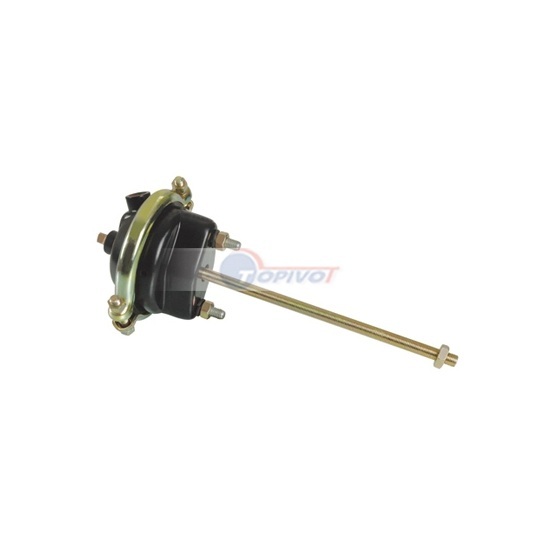
The two chambers share a common family design. The decisive split sits in the stroke. The Air Brake Chamber T9 carries a standard stroke. The Air Brake Chamber T9M carries a long stroke. That difference drives pushrod travel and the port layout on the body.
|
Feature |
T9 |
T9M |
|---|---|---|
|
Stroke type |
Standard stroke |
Long stroke |
|
Diaphragm size |
Matches the original unit, commonly Type 30 |
Matches the original unit, commonly Type 30 |
|
Pushrod length |
Sized to the standard stroke travel |
Sized to the longer stroke travel |
|
Mounting |
Bolt pattern and clamp band match the trailer bracket |
Bolt pattern and clamp band match the trailer bracket |
|
Port identification |
Standard stroke port holes |
Long stroke port holes |
Diaphragm size does not separate the two. A T9 and a T9M can share the same can diameter and the same diaphragm type. Mounting hardware follows the same logic. Both chambers bolt to the bracket in the same way when you order the correct pattern. The pushrod length differs because the stroke differs. A longer stroke needs a rod sized for that travel.
Read the port holes on the body to confirm which one you hold. The holes identify the stroke. The can size does not.
Stroke behavior shapes how each chamber performs in service. A standard stroke chamber moves the pushrod through a shorter arc. A long stroke chamber extends that travel further. Brake adjustment and slack adjuster setup must match the stroke the chamber delivers.
The T9 fits best on trailers built around standard stroke geometry. Dry vans and general service trailers commonly fall into this group. The chamber delivers predictable pushrod travel that matches the slack adjuster range the trailer was built for.
The T9M fits best where the trailer design calls for longer pushrod travel. Heavier duty applications and setups with different mounting or stroke requirements often point here. The longer stroke gives the brake system the travel it was engineered to use.
Neither chamber outperforms the other in a general sense. Each one serves the geometry it was designed for. Fit the stroke to the trailer, and the brake system behaves as intended. Force a long stroke chamber onto a standard stroke axle, and pushrod travel runs outside the expected range. Force a standard stroke chamber onto a long stroke axle, and the brakes may not fully apply.
Cntopivot supplies both the T9 and the T9M. Confirm the stroke type from your old chamber's port holes before you order. That single check keeps the replacement matched to your trailer's brake geometry.
Trailer type narrows the choice quickly. A standard dry van typically runs standard stroke geometry, so the Air Brake Chamber T9 is the natural fit. Flatbeds and general freight trailers usually follow the same pattern. Check the port holes on the old unit first, then confirm the match.
Heavy-duty applications deserve a closer look. Some heavy trailers and specialized setups use long stroke geometry, which points to the T9M. Mounting configuration can also shift the answer. A trailer with a different bracket or stroke requirement may need the T9M even when the can size looks identical. Cntopivot can verify the correct chamber once you share your old unit's specs.
Compliance starts with the part itself. Confirm the chamber meets the federal air brake standard that applies to your trailer, FMVSS 121, and carries the markings that show it. Ask your supplier for documentation that ties the part to that standard. A chamber without traceable compliance puts your trailer's safety and your operation at risk.
Cost deserves a long view. OEM chambers usually carry a higher upfront price and predictable quality. Aftermarket options often cost less and vary more in consistency. Compare total value, not sticker price: a chamber that fails early costs more in downtime and replacement labor than it saves at purchase. Availability matters too, especially for fleets that cannot afford to wait. Cntopivot stocks both the T9 and T9M so you can match compliance, fit, and budget in one order.
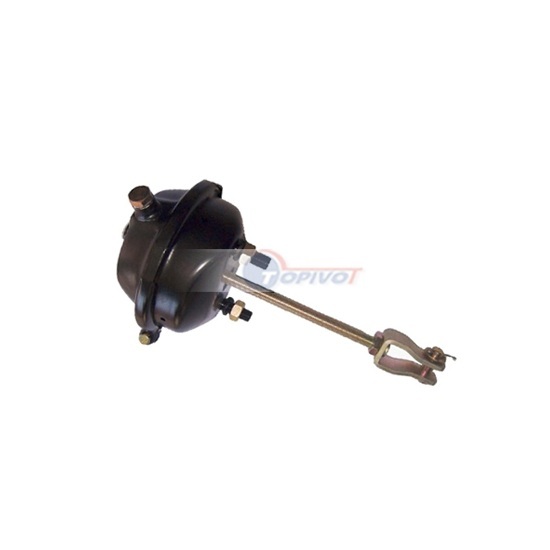
Trailer type gives you a fast first read on the correct chamber. Use the table below as a starting filter, then confirm the answer against the port holes on your old unit.
|
Trailer Scenario |
Typical Stroke Geometry |
Chamber to Start With |
|---|---|---|
|
Standard dry van |
Standard stroke |
Air Brake Chamber T9 |
|
Flatbed and general freight |
Standard stroke |
Air Brake Chamber T9 |
|
Heavy-duty or specialized setup |
Long stroke |
Air Brake Chamber T9M |
|
Trailer with a non-standard bracket |
Varies by build |
Confirm with Cntopivot before ordering |
A standard dry van hauls typical payloads on routes that suit standard stroke geometry. The T9 matches that build and delivers pushrod travel within the range the slack adjuster expects. Flatbeds and general freight trailers usually follow the same pattern. Inspect the old chamber first, read the port holes, and order the T9 when the holes confirm a standard stroke.
Heavy-duty applications need more care. Some heavy trailers and specialized setups run long stroke geometry, and those point to the T9M. A trailer with an unusual bracket or a different stroke requirement may also need the T9M even when the can diameter looks identical to a T9. Share your old unit's specs with Cntopivot and the team will confirm the match before you buy.
The most common error is guessing stroke type from can size. Can diameter tells you nothing about stroke. A standard stroke unit and a long stroke unit can share the same can body and the same diaphragm type. Only the port holes and the body stamping reveal the stroke. Order by can size alone and you risk fitting the wrong chamber to your axle.
Never mix long stroke and standard stroke chambers on the same axle. Uneven pushrod travel unbalances braking and lengthens stopping distance.
That warning deserves emphasis. Brake balance depends on every chamber on an axle delivering the same pushrod travel. Fit one long stroke chamber beside a standard stroke chamber and the two brakes apply at different rates. The trailer pulls under braking, tires wear unevenly, and stopping distance grows. Replace chambers in axle pairs when the stroke type is in doubt.
A second mistake is skipping the compliance check. Confirm the chamber carries the FMVSS 121 marking and comes with traceable documentation. A part without that proof leaves your trailer outside the standard, whatever the price tag says.
A third mistake is ordering in a hurry without measuring the pushrod. Rod length must suit the stroke the chamber delivers. Measure the old rod end to end, note the mounting pattern, and hand those details to your supplier. Cntopivot stocks both chamber types and will cross-check your measurements against the correct part. A few minutes of verification beats a roadside failure.
Your trailer's application, stroke requirements, and compliance needs decide the right chamber. Neither option wins in general terms. The Air Brake Chamber T9 suits standard stroke geometry, and the Air Brake Chamber T9M serves long stroke setups. Use the scenario guide above to select with confidence, then verify the port holes on your old unit before you order.
Cntopivot can confirm the correct Air Brake Chamber T9 or T9M for your specific trailer setup. Share your measurements, and the team will cross-check them against the right part. Both options have a proper place in the right application. Match the chamber to your trailer, and your brake system will perform as designed.
Read the port holes on the chamber body. The port layout identifies the stroke type. The T9 carries a standard stroke, and the T9M carries a long stroke. Can diameter will not help you here, because both chambers can share the same can size and diaphragm type.
Only when your trailer's brake geometry calls for a long stroke. The two chambers are not freely interchangeable. A long stroke chamber on a standard stroke axle pushes the rod outside its expected travel range. Confirm the stroke from your old unit's port holes before you swap.
Brake balance depends on every chamber on an axle delivering the same pushrod travel. A long stroke chamber beside a standard stroke chamber applies at a different rate. The trailer pulls under braking, tires wear unevenly, and stopping distance grows. Replace chambers in axle pairs when in doubt.
Confirm the chamber meets FMVSS 121 and carries the marking that shows it. Ask for documentation that ties the part to that standard. A chamber without traceable compliance leaves your trailer outside the standard, whatever the price. Cntopivot can supply the paperwork with your order.
Share your old chamber's specs with Cntopivot: diaphragm size, port holes, pushrod length, and mounting pattern. The team stocks both the Air Brake Chamber T9 and the Air Brake Chamber T9M and will cross-check your measurements against the correct part before you purchase.
escanear a wechat